Understanding analytical instruments is fundamental for anyone involved in quality control, research and development, process optimization, or regulatory compliance across numerous industries. For beginners, the array of available technologies can seem daunting. This guide demystifies the core principles and common applications of these essential tools, providing a practical framework for identifying the right instrument for specific measurement needs. The goal is to equip you with the foundational knowledge to appreciate how these devices generate critical data, enabling informed decisions that impact product quality, safety, and operational efficiency.
What Analytical Instruments Do
Analytical instruments are specialized devices designed to measure and analyze the physical or chemical properties of substances. Their primary function is to provide precise, objective data about a sample's composition, structure, and characteristics. This data can be qualitative, identifying what components are present, or quantitative, determining how much of each component exists. These instruments translate complex chemical and physical interactions into interpretable signals, often digital, allowing for accurate record-keeping and trend analysis.
The utility of these instruments spans from ensuring the purity of pharmaceutical compounds to monitoring environmental pollutants, verifying food safety, and characterizing novel materials. They replace subjective observations with verifiable metrics, which is crucial for modern industrial and scientific processes.
Core Categories of Analytical Instrumentation
While the field is vast, most analytical instruments fall into several key categories, each leveraging different scientific principles to achieve specific measurement goals.
Spectroscopy Techniques
Spectroscopy involves the interaction of electromagnetic radiation (light) with matter. By analyzing how light is absorbed, emitted, or scattered by a sample, spectroscopes reveal information about its chemical composition and molecular structure.
- UV-Vis Spectroscopy: Measures the absorption of ultraviolet and visible light.
Best for: Quantifying concentrations of substances in solutions, identifying organic compounds, and monitoring reaction kinetics.
- Infrared (IR) Spectroscopy (e.g., FTIR): Measures the absorption of infrared light, which causes molecular vibrations.
Best for: Identifying functional groups in organic and inorganic compounds, quality control of polymers, and forensic analysis.
- Atomic Absorption (AA) and Emission (ICP-OES): Measure the absorption or emission of light by free atoms.
Best for: Quantifying trace metals in environmental samples, food, and biological fluids.
Chromatography Methods
Chromatography is a separation technique used to isolate and analyze components within a complex mixture. It works by passing a sample through a stationary phase with the aid of a mobile phase, separating components based on their differential affinities for these phases.
- Gas Chromatography (GC): Separates volatile compounds by vaporizing them and passing them through a column.
Best for: Analyzing gases, solvents, pesticides, and flavors in food and environmental samples.
- High-Performance Liquid Chromatography (HPLC): Separates non-volatile or thermally unstable compounds in a liquid mobile phase under high pressure.
Best for: Pharmaceutical analysis, food quality control, and clinical diagnostics for complex biological samples.
Electrochemistry Instruments
Electrochemistry instruments measure electrical properties of a solution to determine concentrations or characteristics of ions. They rely on the principles of electron transfer and ionic conductivity.
- pH Meters: Measure the acidity or alkalinity of a solution.
Best for: Water quality testing, food processing, and chemical manufacturing where pH control is critical.
- Conductivity Meters: Measure the electrical conductivity of a solution, indicating the total concentration of dissolved ions.
Best for: Monitoring water purity, assessing nutrient solutions, and industrial process control.
Thermal Analysis Systems
Thermal analysis techniques measure changes in the physical and chemical properties of materials as a function of temperature or time, while the sample is subjected to a controlled temperature program.
- Differential Scanning Calorimetry (DSC): Measures heat flow associated with transitions in materials as a function of temperature.
Best for: Characterizing polymers, pharmaceuticals, and foods by determining melting points, glass transition temperatures, and reaction kinetics.
- Thermogravimetric Analysis (TGA): Measures the change in mass of a sample as it is heated.
Best for: Determining material decomposition temperatures, moisture content, and composition of composites.
Microscopy Platforms
Microscopy allows for the visualization of structures too small to be seen with the naked eye, providing insights into morphology, composition, and surface features at micro and nano scales.
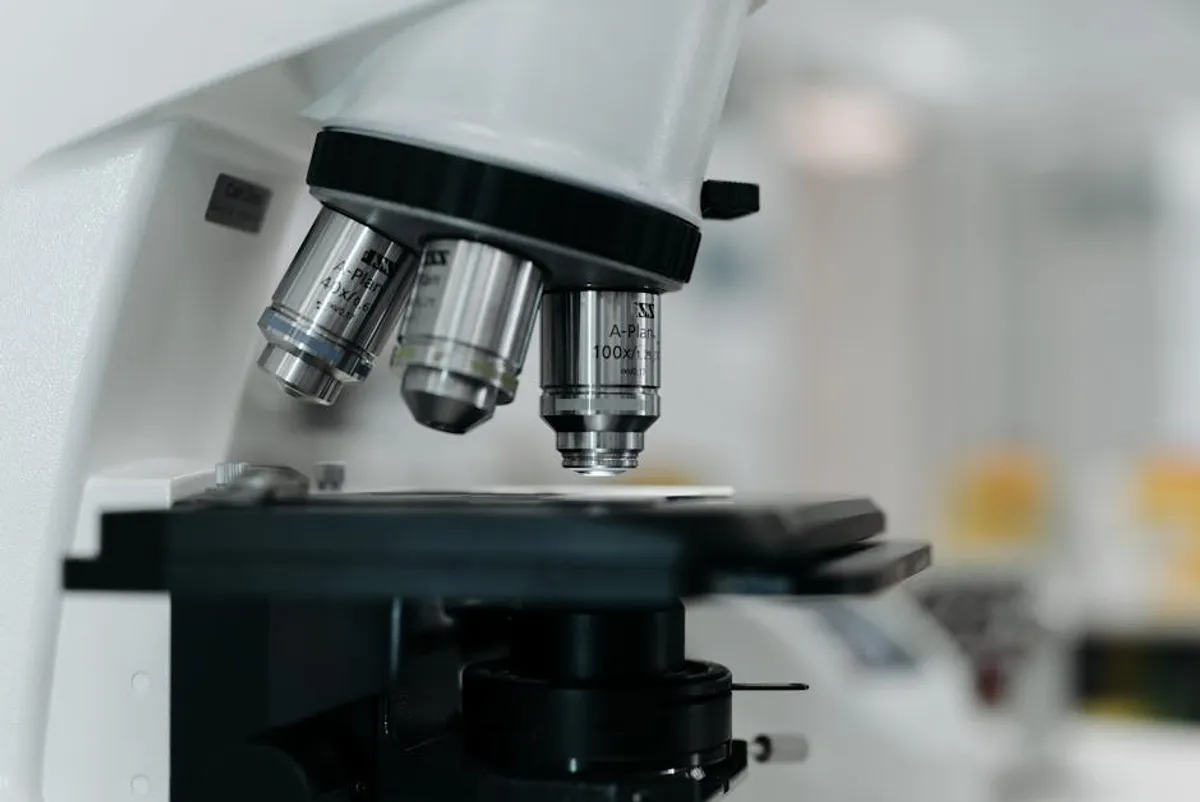
- Optical Microscopes: Use visible light and lenses to magnify samples.
Best for: Biological cell observation, material defect analysis, and educational purposes.
- Electron Microscopes (SEM/TEM): Use beams of electrons to image samples at much higher magnifications and resolutions than optical microscopes.
Best for: Nanomaterial characterization, semiconductor inspection, and advanced biological imaging.
Selecting the Right Analytical Instrument
Choosing an analytical instrument requires careful consideration of several practical factors to ensure it meets specific operational and financial requirements.
Application Specificity and Measurement Goals
Define precisely what needs to be measured (e.g., specific contaminants, elemental composition, molecular structure) and why. Different instruments excel at different tasks. For instance, if trace metal detection is paramount, AA or ICP-OES are more suitable than a pH meter.
Required Sensitivity and Accuracy
Determine the detection limits and precision necessary for your application. Regulatory standards often dictate these parameters, especially in pharmaceutical or environmental testing. Higher sensitivity often corresponds to higher instrument cost and complexity.
Sample Type and Preparation
Consider the physical state (solid, liquid, gas), volume, and complexity of your samples. Some instruments require extensive sample preparation, which adds to labor and material costs. Others can handle samples directly with minimal pre-treatment.
Operational Costs and Throughput
Beyond the initial purchase, factor in consumables (reagents, columns), maintenance, calibration, and utility costs. Evaluate the instrument's throughput capacity – how many samples it can process per hour – to match it with your workload demands.
Pro Tip: When evaluating analytical instruments, always request a demonstration with your specific sample types. This reveals practical challenges, workflow considerations, and confirms whether the instrument's performance aligns with your real-world application needs, preventing costly mismatches later.
Ensuring Long-Term Performance and Value
Once an analytical instrument is acquired, its long-term reliability and accuracy depend heavily on proper care and maintenance. Adhering to best practices extends its lifespan and ensures consistent, trustworthy data output.
Regular Calibration and Validation
Analytical instruments drift over time. Regular calibration with certified reference materials is essential to maintain accuracy. Validation ensures that the instrument consistently performs within specified parameters, critical for regulated environments.
Preventative Maintenance Schedules
Follow manufacturer-recommended preventative maintenance routines, which often include cleaning, replacing worn parts, and checking connections. Proactive maintenance minimizes unexpected downtime and costly repairs.
Proper Sample Handling and Environment Control
Contamination or improper sample storage can lead to erroneous results and instrument damage. Maintain a clean operating environment and adhere to strict protocols for sample preparation and introduction. Environmental factors like temperature and humidity can also impact instrument performance.
Software and Firmware Updates
Keep instrument software and firmware updated. These updates often include performance enhancements, bug fixes, and new features that can improve efficiency and data integrity.
Frequently Asked Questions
What is the primary difference between qualitative and quantitative analysis?
Qualitative analysis identifies the presence or absence of specific substances or components in a sample (e.g., "Is lead present?"). Quantitative analysis determines the exact amount or concentration of those substances (e.g., "How much lead is present?").
How often should analytical instruments be calibrated?
Calibration frequency depends on the instrument type, its usage intensity, the required accuracy, and regulatory guidelines. Some instruments may require daily calibration, while others can be calibrated weekly, monthly, or quarterly. Always consult the manufacturer's recommendations and your specific application's quality control procedures.
Are all analytical instruments complex to operate?
No. While some high-end research instruments require specialized training, many modern analytical instruments are designed with user-friendly interfaces and automation features, making them accessible to operators with basic training. The complexity often correlates with the instrument's capability and the precision required.
What kind of training is typically required to operate these instruments?
Basic operation often requires hands-on training provided by the manufacturer or experienced users. For more advanced troubleshooting, data interpretation, or method development, a background in chemistry, physics, or a related scientific discipline, along with specific instrument training, is generally beneficial.