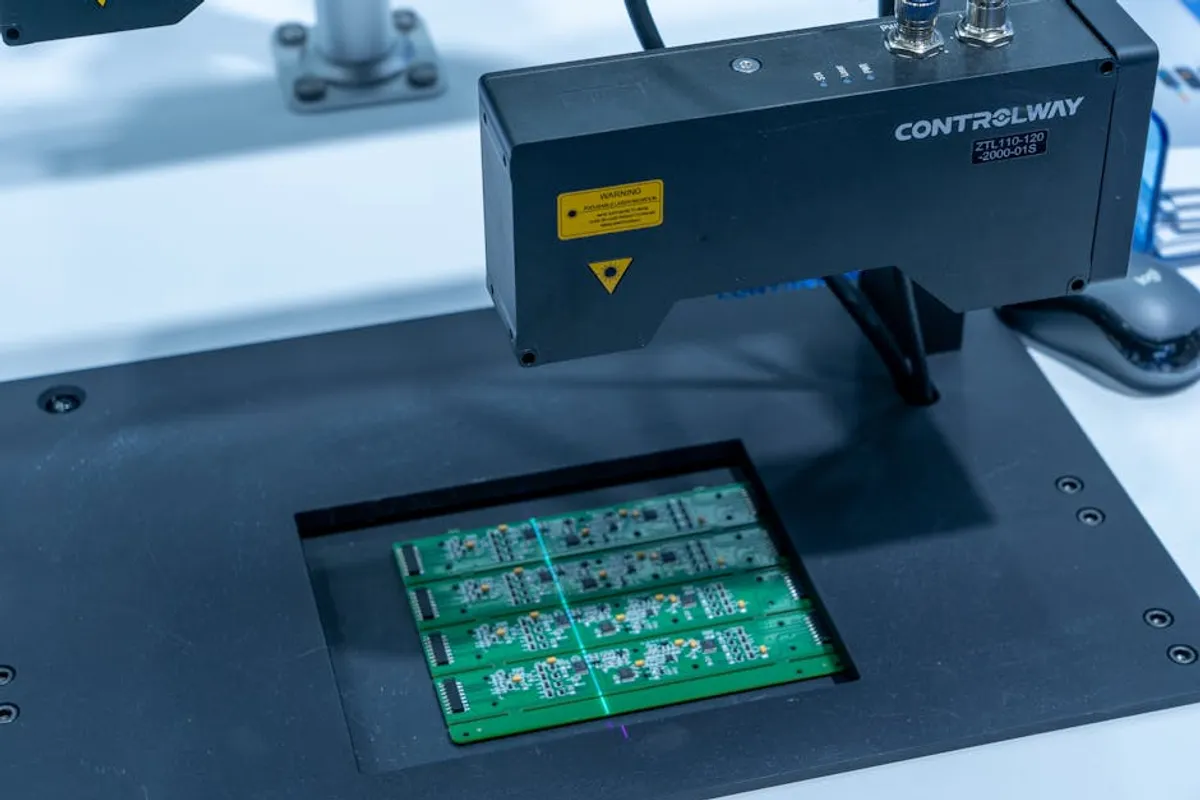
Selecting the correct industrial sensor is a critical decision that directly impacts operational efficiency, safety protocols, and the reliability of data within any automated system. The sheer variety of sensor types, each designed for specific measurement tasks and environmental conditions, necessitates a structured approach to evaluation. Understanding the core principles behind different sensor technologies, their typical applications, and the key criteria for selection ensures that deployed systems deliver accurate, consistent performance over their operational lifespan.
Types of Industrial Sensors
Industrial sensors convert physical parameters into measurable electrical signals, enabling monitoring and control. Their classification often depends on the physical quantity they measure or their operating principle.
Proximity Sensors
These sensors detect the presence or absence of an object without physical contact. They are fundamental for automation, counting, positioning, and safety.
- Inductive Proximity Sensors: Utilize an electromagnetic field to detect metallic objects. They are robust, immune to dirt and moisture, and commonly used for object detection in harsh industrial environments.
- Capacitive Proximity Sensors: Detect both metallic and non-metallic objects by sensing changes in capacitance. Useful for level detection of liquids or bulk materials, and for sensing through non-metallic barriers.
- Photoelectric Sensors: Employ a light beam (infrared, red, or laser) to detect objects. They can operate in through-beam, retro-reflective, or diffuse-reflective modes, offering versatility for various detection ranges and object types, including transparent materials.
- Ultrasonic Sensors: Emit high-frequency sound waves and measure the time it takes for the echo to return. Effective for distance measurement, level sensing, and detecting objects regardless of color or transparency, even in dusty or smoky environments.
Temperature Sensors
Monitoring temperature is crucial for process control, quality, and safety in many industrial applications.
- Thermocouples: Consist of two dissimilar metal wires joined at one end, generating a voltage proportional to temperature differences. They are robust, self-powered, and suitable for wide temperature ranges, though less accurate than RTDs.
- Resistance Temperature Detectors (RTDs): Utilize the principle that electrical resistance of metals changes with temperature. Platinum RTDs (Pt100, Pt1000) offer high accuracy and repeatability over a moderate temperature range.
- Thermistors: Semiconductor-based resistors whose resistance changes significantly with temperature. They offer high sensitivity and fast response times, typically used for narrower temperature ranges.
Pressure Sensors
These devices measure the force exerted by a fluid or gas per unit area, critical for fluid power systems, process control, and safety.
- Strain Gauge Pressure Sensors: Convert pressure into an electrical signal by measuring the deformation of a diaphragm or beam. Widely used for their reliability and accuracy across various pressure ranges.
- Capacitive Pressure Sensors: Measure pressure by detecting changes in capacitance between a fixed and a movable plate. Offer high sensitivity and stability, often used in low-pressure applications.
- Piezoelectric Pressure Sensors: Generate a voltage when subjected to mechanical stress. Ideal for dynamic pressure measurements due to their fast response time.
Flow Sensors
Flow sensors measure the rate of fluid or gas movement through a pipe or channel, essential for batch control, blending, and resource management.
- Coriolis Flow Meters: Measure mass flow directly by detecting the Coriolis effect on vibrating tubes. Highly accurate for a wide range of fluids, independent of density or viscosity.
- Electromagnetic Flow Meters: Measure the velocity of conductive liquids by detecting the voltage induced as the liquid flows through a magnetic field. No moving parts, suitable for corrosive or abrasive fluids.
- Ultrasonic Flow Meters: Use sound waves to measure fluid velocity. Can be non-invasive (clamp-on) or invasive, suitable for various fluids including those with suspended solids.
Level Sensors
These sensors determine the height of a liquid, powder, or granular material within a container, crucial for inventory management and process automation.
- Float Level Sensors: Simple mechanical devices that use a buoyant float to actuate a switch as the liquid level changes. Reliable for basic high/low level detection.
- Ultrasonic Level Sensors: Emit sound waves and measure the time of flight to the liquid surface. Non-contact, suitable for various materials, and can provide continuous level measurement.
- Radar Level Sensors: Emit microwave signals and measure the time of flight. Highly accurate, unaffected by temperature, pressure, or vapor, effective for challenging liquids and solids.
Common Applications for Industrial Sensors
The integration of industrial sensors drives automation and data acquisition across diverse sectors.
Manufacturing and Automation: Sensors are integral to robotic systems for precise positioning, object detection on conveyor belts, and monitoring machine health. They ensure components are correctly aligned, parts are counted accurately, and machinery operates within specified parameters, leading to increased throughput and reduced errors.
Process Control: In industries like chemical processing, food and beverage, and pharmaceuticals, sensors monitor and regulate critical variables such as temperature, pressure, flow, and level. This ensures product consistency, optimizes reaction conditions, and maintains safety margins.
Environmental Monitoring: Sensors detect pollutants, monitor air and water quality, and track environmental conditions in industrial settings. This supports regulatory compliance and proactive hazard management.
Quality Assurance: From detecting defects in products to verifying correct assembly, sensors provide real-time data for quality control. Vision systems, often powered by advanced optical sensors, inspect products for flaws at high speeds, minimizing waste and ensuring product integrity.
Safety Systems: Proximity sensors prevent collisions between machinery and personnel, while gas sensors detect hazardous leaks. Temperature and pressure sensors can trigger alarms or shutdowns to prevent equipment damage or catastrophic failures, protecting both assets and human life.
Key Considerations for Sensor Selection
Choosing the appropriate sensor involves evaluating specific operational demands against sensor capabilities.
Environmental Factors
The operating environment dictates sensor durability and performance. Consider temperature extremes, humidity levels, exposure to dust, chemicals, or corrosive agents. Vibrations, shocks, and electromagnetic interference (EMI) can also degrade sensor accuracy or lifespan. Selecting sensors with appropriate IP ratings (Ingress Protection) and material construction (e.g., stainless steel for corrosive environments) is essential for long-term reliability.
Performance Specifications
These metrics define a sensor's ability to provide accurate and reliable data.
- Accuracy: The degree to which a sensor's measurement approaches the true value. Specified as a percentage of the full-scale range.
- Repeatability: The ability of a sensor to produce the same output for the same input under identical conditions. Critical for consistent process control.
- Range: The minimum and maximum values a sensor can reliably measure.
- Resolution: The smallest change in the measured quantity that the sensor can detect.
- Response Time: The speed at which a sensor reacts to a change in the measured parameter. Important for dynamic processes.
- Hysteresis: The difference in output when approaching a value from increasing versus decreasing inputs.
Pro Tip: Always specify performance requirements slightly beyond typical operating conditions. This provides a safety margin and accounts for environmental fluctuations or unexpected process variations, preventing premature sensor failure or inaccurate readings under stress.
Output Signal and Connectivity
Sensors generate various output signals that must be compatible with control systems (PLCs, DCS, SCADA). Common types include:
- Analog Outputs: 4-20 mA current loops, 0-10 V voltage signals. Robust against noise, suitable for continuous measurement.
- Digital Outputs: On/off signals, pulse trains. Used for discrete detection or counting.
- Serial Communication: RS-232, RS-485. For data transmission over longer distances or to multiple devices.
- Fieldbus Protocols: Modbus, PROFINET, EtherNet/IP, IO-Link. Enable networked communication, offering advanced diagnostics and configuration capabilities.
- Wireless Connectivity: Bluetooth, Wi-Fi, LoRaWAN. Useful for remote monitoring or applications where wiring is impractical.
Ensure the chosen sensor's output type integrates seamlessly with existing control infrastructure to avoid costly interface solutions.
Material Compatibility and Mounting
For sensors in direct contact with process media, the sensor material must be compatible with the substance being measured to prevent corrosion, contamination, or degradation. Stainless steel, PTFE, and ceramic are common choices. Mounting options (threaded, flange, clamp-on) must suit the mechanical design of the system and allow for easy installation and maintenance.
Cost and Lifespan
Initial purchase price is one factor; consider the total cost of ownership, including installation, calibration, maintenance, and potential downtime due to failure. A more expensive sensor with a longer lifespan and higher reliability may offer a lower total cost over time compared to a cheaper, less robust alternative requiring frequent replacement or recalibration.
Establishing a Sensor Strategy
Effective sensor deployment goes beyond individual component selection. It involves a holistic view of the system, anticipating future needs, and standardizing where possible. Documenting sensor specifications, calibration schedules, and maintenance procedures ensures consistent performance and simplifies troubleshooting. Prioritize sensors that offer diagnostic capabilities, allowing for predictive maintenance and minimizing unexpected failures. A well-defined sensor strategy supports scalable automation, data-driven decision-making, and sustained operational excellence.
Frequently Asked Questions
What is the primary function of an industrial sensor?
An industrial sensor's primary function is to detect, measure, and convert physical parameters (like temperature, pressure, or proximity) into an electrical signal that can be processed and interpreted by control systems for monitoring or automation.
How does the operating environment influence sensor choice?
The operating environment dictates sensor durability and accuracy. Factors such as extreme temperatures, humidity, corrosive chemicals, vibration, and dust necessitate selecting sensors with appropriate material construction, sealing (IP rating), and robust design to ensure reliable performance and longevity.
What are common output signals for industrial sensors?
Common output signals include analog (e.g., 4-20 mA current, 0-10 V voltage) for continuous measurement, digital (on/off, pulse) for discrete detection, and various fieldbus protocols (Modbus, PROFINET) or wireless options for networked communication and advanced data exchange.
Why is calibration important for industrial sensors?
Calibration is crucial because it verifies and adjusts a sensor's output against a known standard, ensuring its measurements remain accurate and reliable over time. Regular calibration prevents drift, maintains process quality, and supports regulatory compliance.