Quality control (QC) testing equipment forms the bedrock of product reliability, safety, and regulatory compliance across virtually every manufacturing sector. For businesses, selecting the appropriate testing apparatus is not merely a technical decision; it directly impacts brand reputation, operational costs, market acceptance, and the long-term viability of products. The investment in precise, repeatable, and robust QC tools translates into reduced waste, fewer recalls, enhanced customer satisfaction, and a stronger competitive position. This guide explains the primary categories of QC testing equipment, detailing their functions and commercial applications to help businesses make informed procurement choices aligned with their specific production requirements and quality objectives. Beyond understanding the equipment itself, knowing how to choose scientific instruments for accurate testing will ensure your investments yield the best results.
Understanding the Core Role of QC Testing Equipment
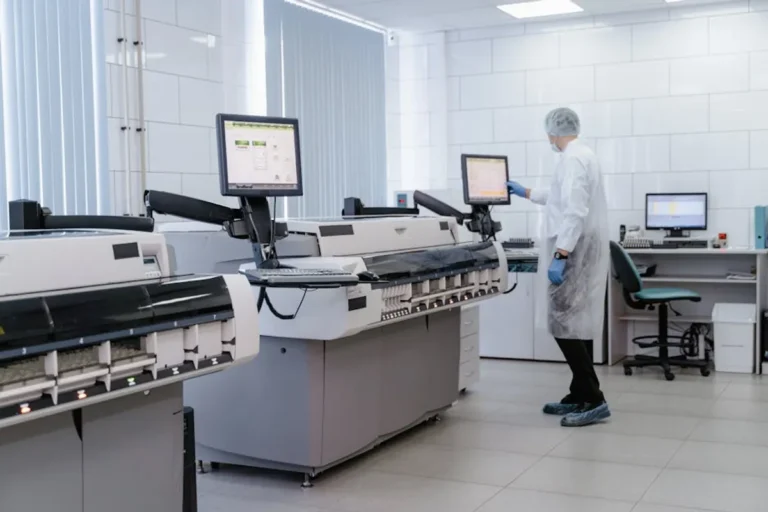
Quality control testing equipment provides objective data to verify that a product or its components meet predefined specifications and performance criteria. This verification process is critical at various stages: incoming raw materials inspection, in-process manufacturing checks, and final product validation. The equipment's primary function is to identify deviations, defects, or non-conformities before they escalate into costly failures or market withdrawals. Effective implementation of QC testing reduces the likelihood of product liabilities, ensures adherence to industry standards (e.g., ISO, ASTM), and ultimately safeguards the end-user experience.
The commercial benefit extends beyond defect detection. Data gathered from QC testing equipment can inform process improvements, optimize material selection, and validate design changes. For example, understanding the precise tensile strength of a material through testing can prevent over-engineering, leading to cost savings without compromising safety. Conversely, identifying a weakness can prompt material substitution or design reinforcement, averting catastrophic failures.
Key Categories of Quality Control Testing Equipment
Material Composition Analyzers
These instruments are critical for verifying the identity and purity of raw materials and finished products, preventing costly material mix-ups and ensuring compliance with material specifications.
- Fourier Transform Infrared (FTIR) Spectrometers: Used for identifying organic compounds, polymers, and certain inorganic materials. FTIR provides a "fingerprint" spectrum that can confirm material identity, detect contaminants, and analyze chemical changes.
Commercial Application: Verifying polymer types in plastics manufacturing, identifying unknown substances in pharmaceuticals, or confirming the composition of paints and coatings.
- X-ray Fluorescence (XRF) Spectrometers: Non-destructive method for elemental analysis of solids, liquids, and powders. XRF quantifies elemental composition from magnesium to uranium.
Commercial Application: RoHS/WEEE compliance screening for hazardous elements in electronics, alloy verification in metallurgy, and quality assurance in mining and geology.
- Gas Chromatographs (GC) and Mass Spectrometers (MS): Often coupled (GC-MS), these systems separate and identify volatile and semi-volatile compounds in complex mixtures. GC separates components, and MS identifies them by their mass-to-charge ratio.
Commercial Application: Flavor and fragrance analysis in food and beverage, purity testing in pharmaceuticals, and environmental contaminant detection.
Dimensional Measurement Systems
Precision measurement of physical dimensions is fundamental to ensuring parts fit together correctly and function as intended.
- Coordinate Measuring Machines (CMMs): Highly precise instruments that measure the physical geometrical characteristics of an object. CMMs use a probe to detect discrete points on a surface, which are then analyzed by software to define dimensions, tolerances, and geometric features.
Commercial Application: High-precision verification of machined parts in aerospace, automotive, and medical device manufacturing, ensuring complex assemblies meet strict tolerances.
- Optical Comparators (Profile Projectors): Project an enlarged silhouette of a part onto a screen, allowing for visual inspection and measurement of dimensions, angles, and radii against a scaled overlay.
Commercial Application: Rapid inspection of small, intricate parts like stampings, turned components, and electronic connectors where direct contact measurement might be difficult.
- Vision Measurement Systems: Utilize cameras and advanced image processing software to capture and analyze part dimensions. These systems offer high speed and non-contact measurement, suitable for delicate or large quantities of parts.
Commercial Application: Automated inspection of PCBs, micro-components, and mass-produced small parts, providing rapid pass/fail decisions on production lines.
Mechanical Property Testers
These devices evaluate how materials react to applied forces, ensuring they can withstand operational stresses without failure.
- Universal Testing Machines (UTMs): Perform a variety of mechanical tests including tensile, compression, flexural, and shear tests. UTMs measure parameters like yield strength, ultimate tensile strength, elongation, and modulus of elasticity.
Commercial Application: Characterizing the strength and ductility of metals, plastics, composites, and textiles, crucial for product design validation and material selection in structural applications.
- Hardness Testers (e.g., Rockwell, Brinell, Vickers): Measure a material's resistance to permanent deformation (indentation). Different scales are used depending on material type and application.
Commercial Application: Verifying heat treatment processes in metals, assessing the wear resistance of coatings, and ensuring the durability of plastic components.
- Impact Testers (e.g., Charpy, Izod): Determine a material's resistance to fracture under high-speed loading. This indicates toughness and energy absorption capabilities.
Commercial Application: Evaluating the suitability of materials for applications requiring impact resistance, such as automotive components, protective gear, and consumer product casings.
Pro Tip: When evaluating QC testing equipment, consider not just the initial purchase price, but also the total cost of ownership. This includes calibration frequency, consumable costs, software maintenance, required operator training, and the long-term availability of spare parts. A lower upfront cost can quickly be offset by high operational expenses or limited lifespan.
Environmental and Durability Chambers
These chambers simulate various environmental conditions to assess a product's performance and longevity under stress.
- Temperature and Humidity Chambers: Create controlled environments to test product performance and reliability under varying temperature and humidity conditions.
Commercial Application: Evaluating electronics for thermal cycling, testing pharmaceutical stability, and assessing the durability of automotive components in extreme climates.
- Salt Spray Chambers: Accelerate corrosion testing by exposing products to a salt fog atmosphere. This determines the effectiveness of protective coatings and material resistance to corrosion.
Commercial Application: Testing the corrosion resistance of painted parts, metal fasteners, and marine equipment, ensuring product longevity in harsh environments.
- Vibration and Shock Testers: Simulate transport and operational stresses to identify structural weaknesses and evaluate product integrity under dynamic loads.
Commercial Application: Ensuring packaging integrity for shipping, testing the robustness of electronic devices, and validating the structural integrity of components in aerospace.
Electrical and Electronic Test Gear
Essential for ensuring the functionality, safety, and performance of electronic components and finished products.
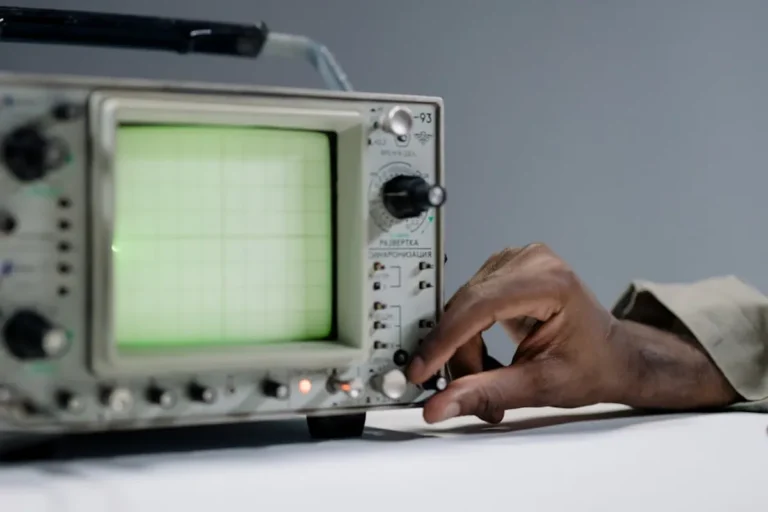
- Digital Multimeters (DMMs) and Oscilloscopes: Basic but fundamental tools. DMMs measure voltage, current, and resistance, while oscilloscopes visualize electrical signals over time, allowing for analysis of waveform shape, frequency, and amplitude.
Commercial Application: Troubleshooting circuits, verifying power supply outputs, and characterizing signal integrity in electronic devices.
- Functional Testers: Custom-built systems designed to simulate a product's operational environment and verify its complete functionality.
Commercial Application: End-of-line testing for consumer electronics, automotive control units, and medical devices, ensuring all features perform as designed before shipment.
- Automated Optical Inspection (AOI) Systems: Use cameras to scan printed circuit boards (PCBs) for defects such as missing components, incorrect polarity, solder shorts, and opens.
Commercial Application: High-speed inspection of PCBs in electronics manufacturing, significantly reducing manual inspection time and improving defect detection rates.
Practical Considerations for Equipment Implementation
Beyond the technical specifications, successful integration of QC testing equipment requires attention to several practical aspects. Space requirements, power consumption, and environmental controls (e.g., vibration isolation, temperature stability) are fundamental. The availability of skilled operators and technicians for calibration, maintenance, and data interpretation is equally important. Furthermore, consider the software integration capabilities—can the equipment's data be easily exported and analyzed within existing quality management systems or statistical process control (SPC) platforms? This data connectivity is crucial for leveraging test results into actionable insights for continuous improvement. Careful consideration of these practical aspects, including appropriate environmental controls, ensures the testing equipment functions optimally.
Vendor support for training, service contracts, and technical assistance should also be a significant factor in the decision-making process. A reliable vendor relationship ensures minimal downtime and maximum utilization of the investment. Finally, scalability and adaptability to future product lines or testing standards are important for long-term value, preventing premature obsolescence of expensive equipment.
Frequently Asked Questions
What is the primary goal of quality control testing equipment?
The primary goal is to objectively verify that products or components meet predefined specifications, performance criteria, and regulatory standards, thereby preventing defects, ensuring reliability, and safeguarding consumer safety.
How does investing in QC equipment benefit a business financially?
Financially, QC equipment reduces costs associated with rework, scrap, warranty claims, and product recalls. It also protects brand reputation, enables market access by ensuring compliance, and can lead to process optimization and material savings.
What factors should be considered when choosing QC testing equipment?
Key factors include the specific material or product to be tested, the type of defect or characteristic to be measured, required precision and accuracy, testing throughput, total cost of ownership (including maintenance and consumables), operator skill requirements, and vendor support.
Can QC testing equipment be integrated with existing production systems?
Many modern QC testing systems offer data output capabilities (e.g., USB, Ethernet, proprietary software APIs) that allow integration with manufacturing execution systems (MES), statistical process control (SPC) software, and other quality management platforms for automated data collection and analysis.